
Clean. Safe. Smart. The future of hive health
2026 field season · April 29 to September 2
One season. Four apiaries.
One season. Four apiaries.
Sixty-nine treatments.
The complete record of what ThermaHive did to mite loads in 2026: how we measured, what the numbers came back as, what the independent testers found, and the fourteen treatments that did not work.
84%
Average mite reduction from each colony’s season peak, 6 of 6 research hives
51%
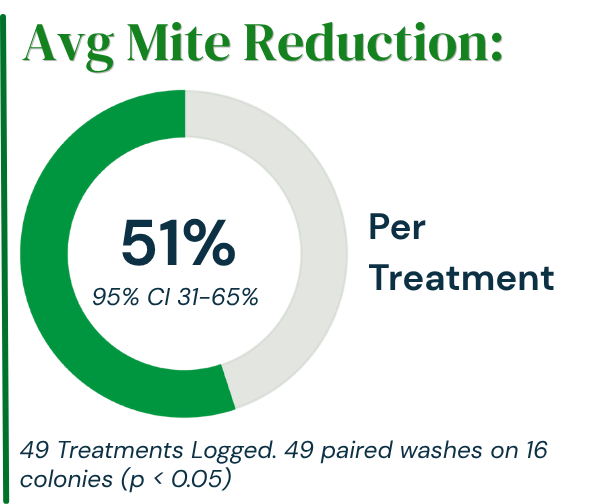
Average mite reduction per treatment, across 49 paired mite washes
Zero Lost
Zero ThermaHive treated colonies lost (20 hives)
250 lbs
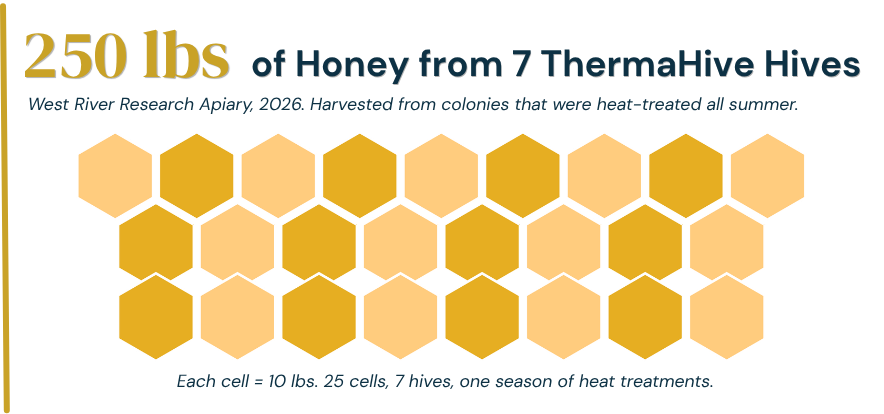
Honey harvested from seven heat-treated hives
Method first
How we measured
The method comes before the numbers on purpose. If you do not agree with how a result was measured, the result is not worth much.
- Soapy-water wash. Dawn dish soap against a 300-bee target sample, counted raw over the bees actually sampled. Soapy water is an approved mite-count method in the Honey Bee Health Coalition’s Tools for Varroa Management, 9th edition, and Randy Oliver’s own testing found it equivalent to an alcohol wash.
- Sampled from the brood nest. Bees were taken from frames carrying capped brood and young larvae, which is where phoretic mites concentrate. We logged frames of brood and queen status with every wash, because a colony’s own brood cycle moves the count. TH-4 is the one colony we hold out of the 84% figure: queen problems left it with nothing but drone brood to sample, so its counts are not comparable. It stays in the paired-wash counts below.
- Paired washes. One wash 0 to 5 days before a treatment and another after it. Both halves are required, which leaves 55 paired washes out of the 69 logged treatments. The single wash we threw out is the New Jersey tester’s, taken after an oxalic acid treatment.
- Efficacy read at 14 to 28 days. This follows Randy Oliver’s recommendation. A wash taken right after a treatment reads low, because mites still under capped brood have not reached the adult bees yet. 49 of the pairs fall inside that window, on 16 colonies, and those are the ones behind the 51% figure. The Georgia and New Jersey testers did not wash inside it.
| Season | Action threshold | Why |
|---|---|---|
| Spring | 1% or higher | A small mite population entering buildup becomes a large one by July. |
| Peak summer | Above 2 to 3% | Colony population is at its largest, so the same percentage represents far more mites. |
| Late summer and fall | 2% or higher | This is the window that decides whether winter bees are raised clean. |
The headline number
Down 84% from the season peak
Every colony at our West River research apiary finished the season far below its own worst mite count of the year.
84% average reduction from season peak, across 6 of 6 West River colonies, p < 0.05. This is our research apiary only. TH-4 is not in it, for the reason given above.

When those reductions happened
Most of the drop came in the back half of the season, once we had worked through the early hardware and firmware problems and moved brood out of the upper honey supers. The early treatments are still counted.
Per treatment, mite load fell by an average of 51% (geometric mean), read at a wash 14 to 28 days later. 49 paired washes on 16 colonies, April 29 to September 2, 2026. 95% confidence interval 31 to 65%.
Direction of change, 55 paired washes
Every treatment with a wash on both sides of it, counted by whether the mite load went down or up.


Heavily infested colonies
On colonies starting at 5% mite load or higher, mean load fell from 9.2% to 4.6% across 13 treatments, a 50.3% reduction. 11 of 13 fell (Wilcoxon p = 0.004).
Control precision
Our best recorded hold averaged 112.03°F against a 112°F setpoint, with 99.6% of a three-hour treatment inside ±2°F and a standard deviation of 0.75°F. Delivery quality varies with the colony.
The biggest takeaway
Every hive is different, so treatment temperature and length depend on the hive.
That is why we built ThermaHive as a customizable system. You set the treatment temperature and the treatment length, and adjust both to the colony in front of you rather than running one fixed program on every hive.
Colony by colony
Every hive, every month
West River colonies TH-1 through TH-7, tracked from the first wash on April 29 to the last on September 2, alongside the untreated and chemically treated control groups.
Phoretic mite load by colony, April 29 to September 2, 2026
Every mite wash on the West River colonies, plotted against the 2% overwintering threshold. TH-4 is not plotted.

At season end, five of seven West River colonies were under the 2% overwintering threshold, and all seven finished under 4% phoretic mite load. Three of them, TH-3, TH-4 and TH-5, finished at zero. The two that finished above 2%, TH-1 and TH-6, are the two that spiked in August.

Not our hives
Independent testers
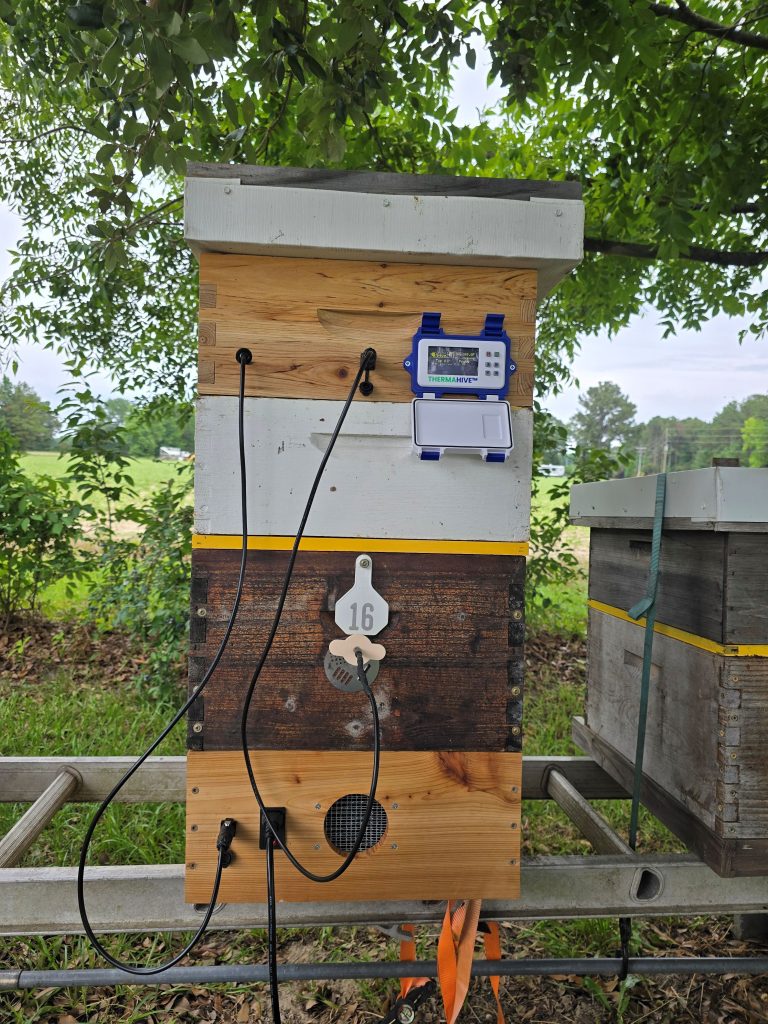
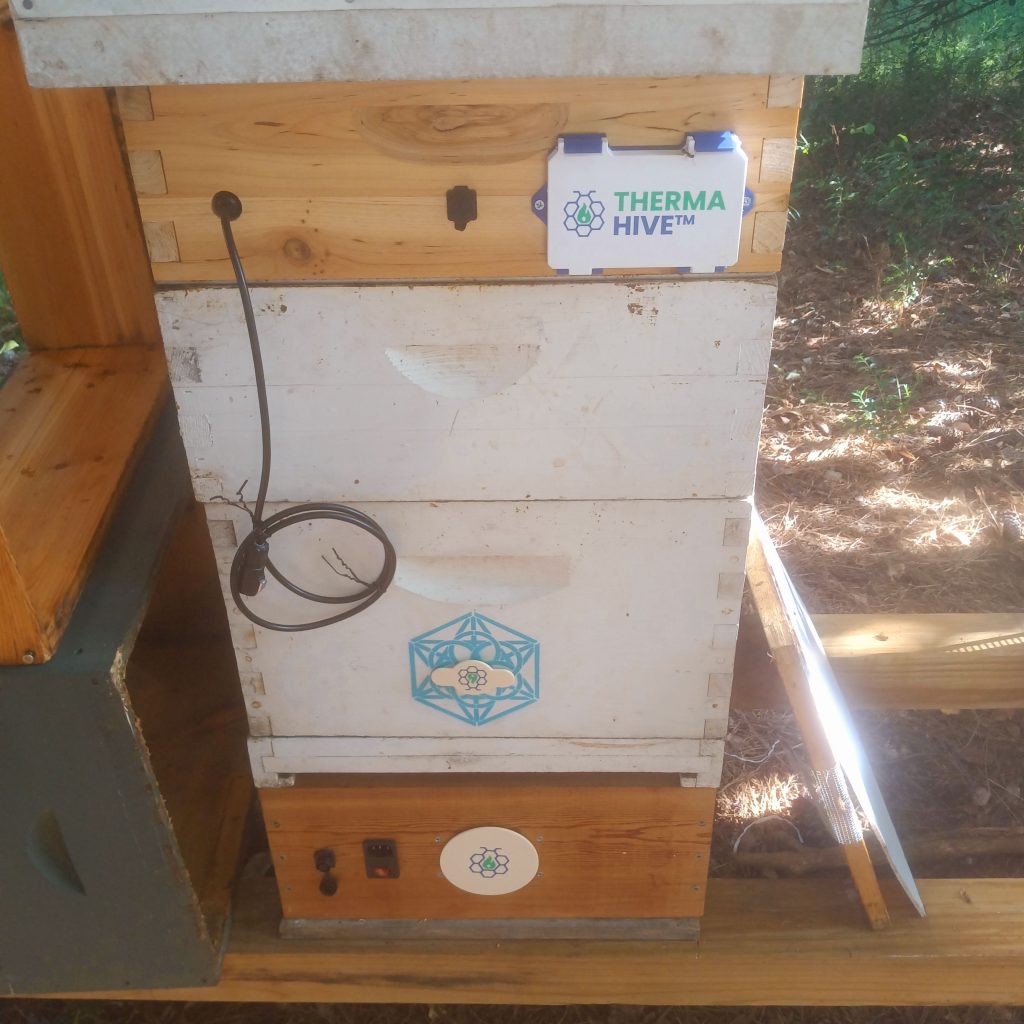
Three beekeepers in three states ran their own units on their own colonies and kept their own counts. These are their numbers, recorded independently of us.
Sent in by testers
ThermaHive V1 Tester Gallery
Photos from beekeepers running V1 units on their own hives.

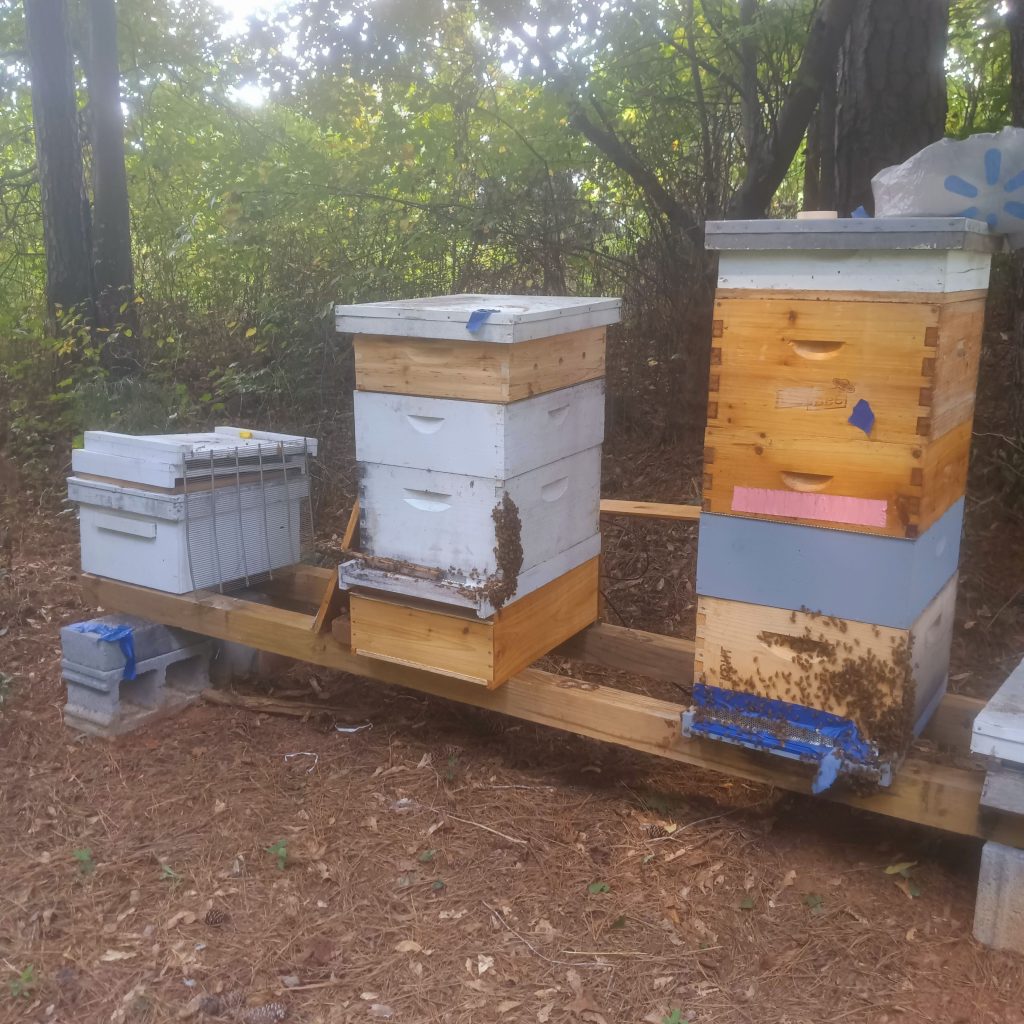

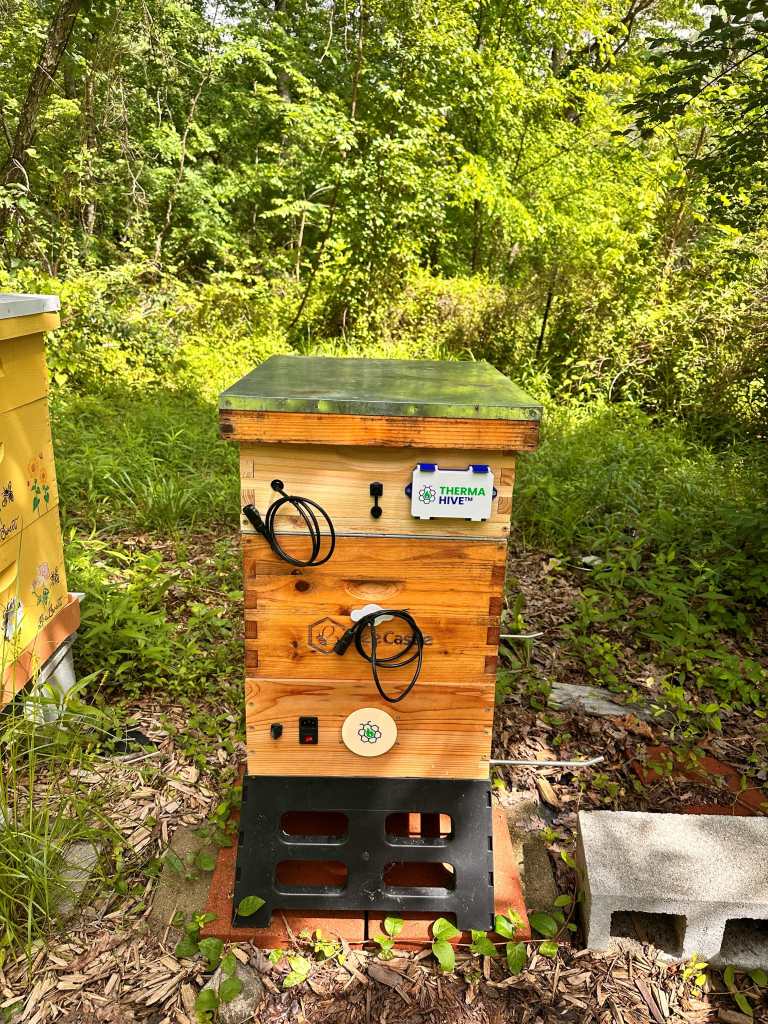
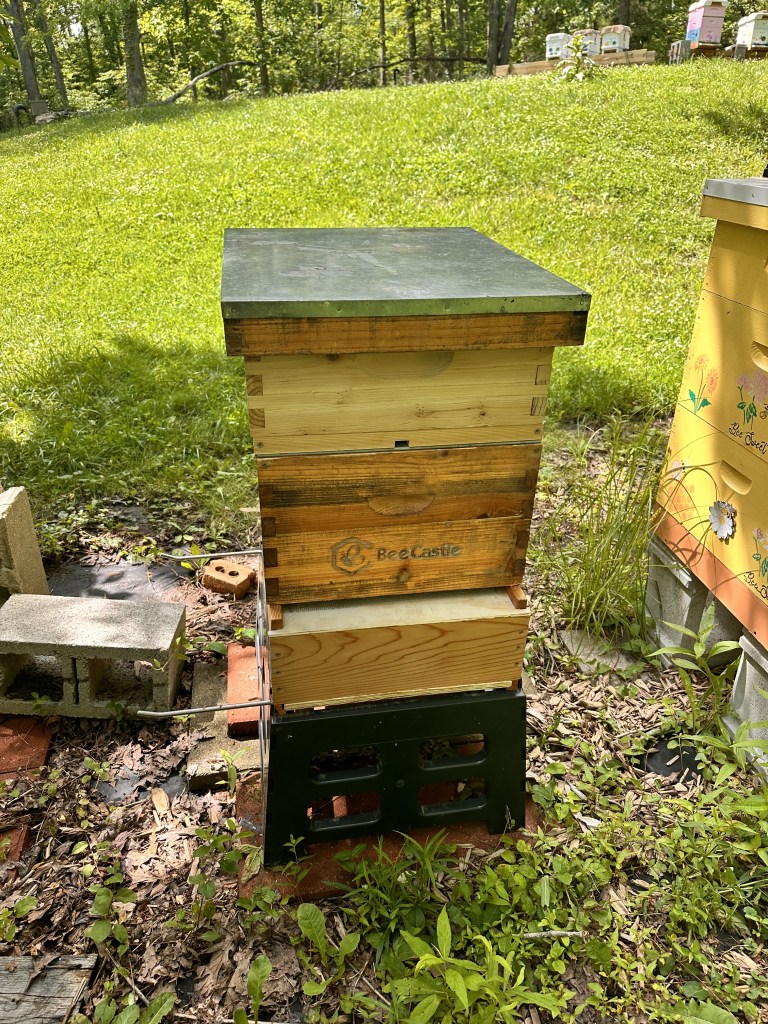
North Carolina
Grey bars show where each hive started the season; the dot is its last wash.

New Jersey
Washes taken before each treatment and 24 to 48 hours after it.

Georgia
One full-dose run, washed five days later.

Third party
Outside verification
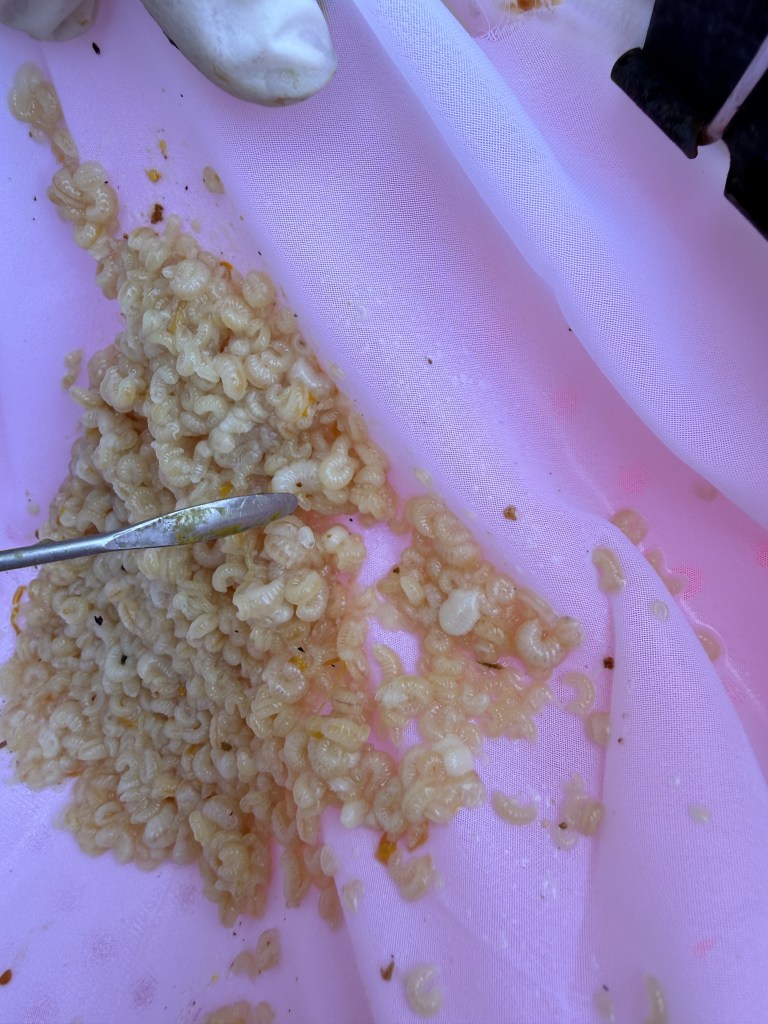
On September 9, 2026, the National Honey Bee Survey sampled our research colonies.
0
mites found in the samples collected in the field
5 of 7
ThermaHive-treated colonies sampled. TH-4 and TH-5 were too small to sample, after queen problems unrelated to treatment
These are preliminary field results. The samples went to the University of Maryland for full lab analysis, including a virus screen and pollen evaluation. Full results are expected in November 2026.
Benchmark
How it compares
A 51% kill rate only means something next to the alternatives.
About 50% of mites per treatment, comparable to one Formic Pro strip
2026 field season, all four apiaries. ThermaHive’s three bars are measured; the whiskers on them are 95% confidence intervals. The chemical bars are Randy Oliver’s published benchmarks, with his published range where he gives one.
ThermaHive sits roughly level with one Formic Pro strip, below two strips and below Amitraz.
Why ThermaHive
A ThermaHive treatment has no temperature ceiling, no honey-super restriction, no waiting period and no resistance pathway, so you can repeat it every three to four weeks all season rather than squeezing it into a weather window.
Six treatments at 51% against the chemical plans
Where a colony’s wash count would sit on November 1 under each plan, on a modelled colony rather than a measured one. Read the coloured lines against the right axis, mites per half-cup of bees.

Note
Our field data runs April 29 to September 2, 2026. Values after September 2 are projected from the model. It also assumes no mite immigration. Our actual hives finished the season between zero and 4 percent.
The first question everyone asks
Do heat treatments impact the properties of raw honey?
On the published chemistry, no, not at any realistic number of treatments. Here is the arithmetic.
Invertase is the enzyme used as honey’s heat-damage marker. It has a half-life of 9.5 days at a continuous 104°F (White, Kushnir and Subers, 1964), which works out to 227.5 hours of cumulative exposure.
In this trial, the honey super logged 2 hours 20 minutes above 104°F per treatment. At that rate it would take roughly 98 treatments to halve invertase activity.
The exposure budget, per treatment
What the honey super actually sees during a treatment, set against the published half-life of invertase, the enzyme used as honey’s heat-damage marker.
One treatmentThree-hour hold at a 112°F setpoint. The super sits above the treated brood boxes, lags them, and never reaches setpoint.
Brood nest at setpoint112°F, logged in the cluster
3 h 00 min
Honey super above 104°Fpeak 109.6°F, average 106.9°F while above
2 h 20 min
How many treatments before invertase halvesA half-life of 9.5 days at a continuous 104°F is 227.5 hours. At 2 h 20 min per treatment, that is about 98 treatments.
6 treatments98 treatments to halve invertase activity
This is an estimate
The 98-treatment figure is a linear extrapolation from a single published half-life, not a measurement of our honey. We intend to send samples to a third-party lab for enzyme testing.
The practical result, measured rather than modelled: seven colonies heat-treated all summer at the research apiary produced 250 lbs of honey in 2026. That harvest came off the same colonies whose mite counts are plotted above, in the same season.
The fourteen
What did not work
Fourteen of 55 washes came back higher. Here is what we know about why.
Two hives: the queen laid in a honey super
ThermaHive regulates to the brood boxes. Heat rises into a super, but a super runs several degrees cooler than the brood nest below it (109.6°F peak against a 112°F hold in our logs), so mites up there got a weaker dose and, depending on the configuration, may never have reached the lethal window. Run a queen excluder, or configure the super as a brood box for the treatment.
TH-4 and TH-5: unrelated queen failures
Both ran small all season after queen problems that had nothing to do with treatment. A treatment does not fix a queenless colony.
Early hardware faults
The first units in the field had failures we have since designed out: a bad RTD probe, a sensor installed backwards, a run that stopped partway. A treatment that never reached temperature is still a treatment in the log, and its wash still counts here.
We were still working out the program
Early in the season we were still settling on setpoint, hold time and how to handle brood in the upper boxes. Several of the early treatments were shorter or cooler than what we now run.
Heat only works at full strength where the system holds it, and no treatment repairs a colony whose real problem is its queen. Some of the fourteen are brood timing rather than treatment failure: a wash only counts mites on adult bees, and a colony sampled mid-emergence releases whatever survived under the cappings into that count all at once. Others have no explanation we can point to. Every hive is different, and sometimes a count simply rises. We report all fourteen as increases regardless.
Sources
Methods and references
The 2026 program ran at our West River research apiary in Maryland, with treated colonies TH-1 through TH-7 and six control colonies, under the supervision of Allan Storm, Master Beekeeper and Maryland State Bee Inspector, who serves as our Technical Advisor for Apiculture. Independent testers in North Carolina, New Jersey and Georgia ran their own units and kept their own records.
Our 2026 results are field data from our own trial, not a peer-reviewed study. The underlying science of thermal Varroa control is well established in the peer-reviewed literature, and we cite it below.
What the published hyperthermia studies found
Five studies, five methods of getting heat into a hive, and what each one reported for mites and for the colony.
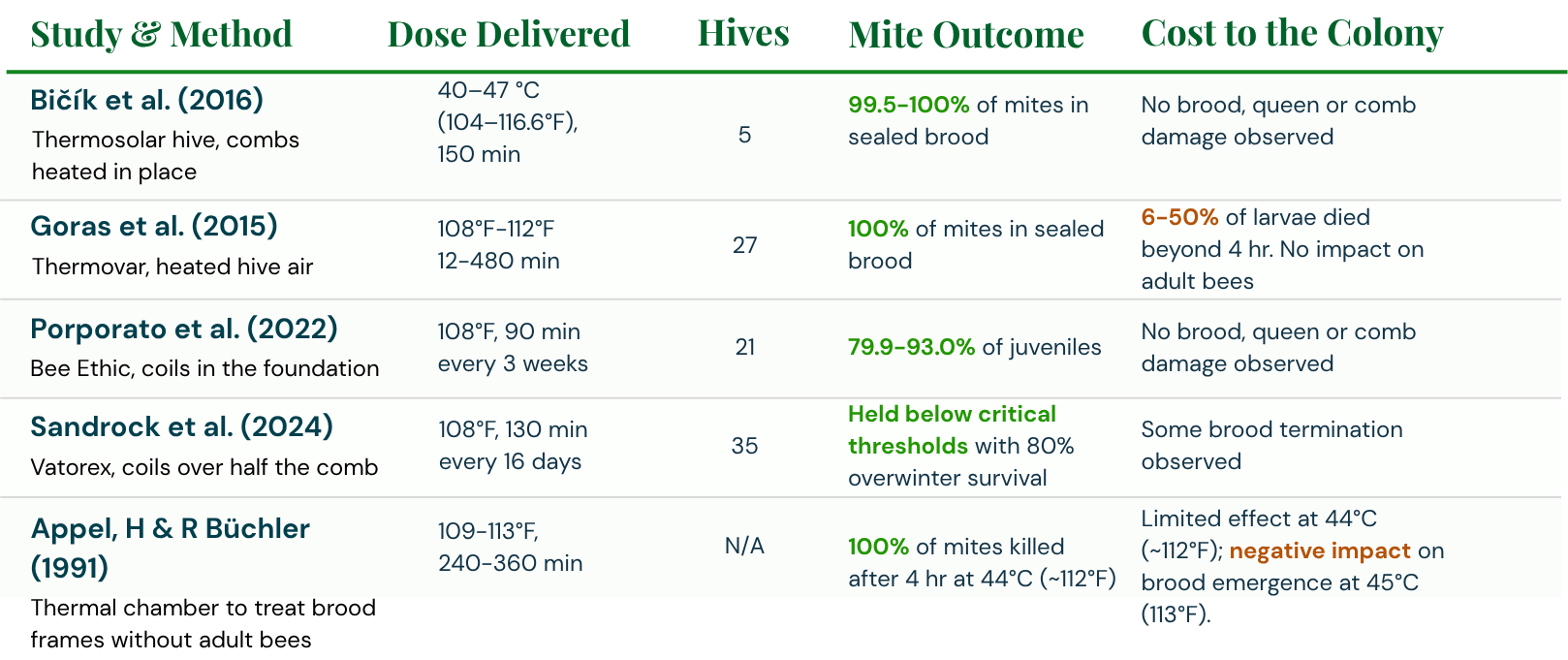
- Bičík, V. et al. (2016). Thermal tolerance of Varroa destructor and mortality of mites in sealed brood at treatment temperatures.
- Goras, G. et al. (2015). Hyperthermia as a Varroa control method, including larval mortality beyond four hours of exposure.
- Appel, H. and Büchler, R. (1991). Effects of elevated temperature on brood emergence at 45°C (113°F).
- White, J. W., Kushnir, I. and Subers, M. H. (1964). Effect of storage and processing temperatures on honey quality. Invertase half-life of 9.5 days at a continuous 104°F.
- Oliver, R. Published treatment efficacy benchmarks and the varroa population model, ScientificBeekeeping.com.
- Honey Bee Health Coalition, “Tools for Varroa Management,” 9th Edition (June 11, 2026).
- US Beekeeping Survey, Auburn University and the Apiary Inspectors of America.
- EU Directive 2024/1438, honey quality limits for HMF and diastase.
The full write-up of the season, with the complete methods and data, is the 2026 Field Season Report (PDF). For a shorter version, the results overview (PDF) collects the headline figures from this page. Still have questions about the method? Ask us directly.
Put this season’s data to work on your hives.
The ThermaHive V2 Complete Kit ships by January 2027, or pick yours up free at NAHBE 2027. Lifetime warranty, one-time purchase.